The Questions and the Cards Rhyme
I look across the coffee table, where I’ve laid out my cloth to create the space, and give the seeker across from me a conspiratorial wink. “Now I need you to ask a question,” I say. “What do you want to know about? What do you want to ask yourself?”
She smiles, sighs, and says, “I’ve been involved in a lot of projects, but that’s come to a close, and I need to know what’s next. What should I focus my efforts on?”
I nod, knowingly. Here is another person who’s in transition and unsure what’s next. It isn’t the first time I’ve heard this question. It won’t be the last.
Storytime: “Welcome to NASCAR Racing”
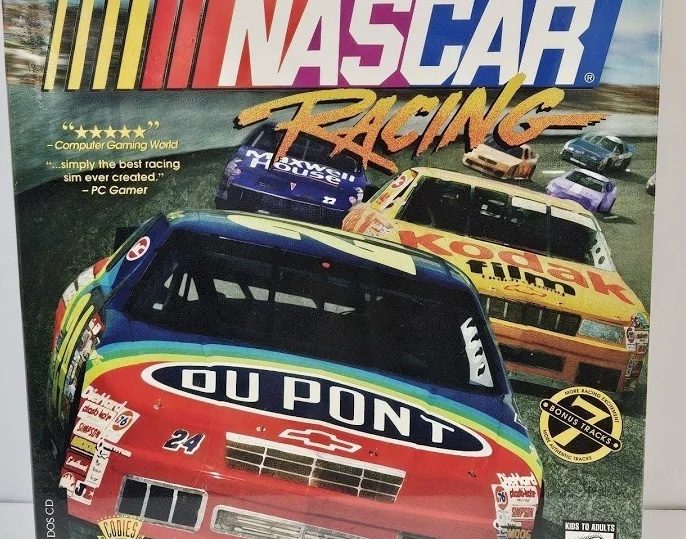
For about a year of my life, success was a twangy voice coming through the phone: “I’m Ned Jarrett. Welcome to NASCAR Racing.” If I heard that clean on the other end of the line, the call was solved.
This was the mid-90s, right before and immediately after graduating from college, when I had a gig providing phone-based tech support for video games. One of the titles I supported was “NASCAR Racing.” Many callers (most with their own Southern twang) had invested in a steering wheel and pedals and bought a computer just to play this game, yet had run into issues. The problem behind the call was almost always one of a small handful of things. By month three, I could talk someone through EDLIN-ing an autoexec.bat file in my sleep. (Shout out to those old enough and geeky enough to know what DOS is.)
The actual list of usual suspects was short:
- Windows 95, when the game had been built for Windows 3.1
- The sound card wasn’t installed correctly
- Somewhere in setup, the caller had typed
X:\instead ofC:\, because the printed instructions said “replace X with the drive letter of your hard drive.” A perfectly reasonable instruction if you knew what a drive letter was.
I really couldn’t blame the users. They were standing too close to their own problem to see it, and didn’t have the knowledge or experience to get past it on their own. It’s exactly the kind of reason to bring in an outside voice for help. What all of it had in common, every single time, was that the actual fix wasn’t really the sound card or the drive letter. It was that those budding armchair racecar drivers needed somebody else to help walk them through it, step by step, in real time.
History Doesn’t Repeat, But It Rhymes
I didn’t know it at the time, but that was my first real lesson in a pattern I’d meet again years later, just with a different table between me and the other person. As historians like to say, history doesn’t repeat itself, but it rhymes. I heard that rhyme first over a phone line, in a lot of different accents asking about which direction a backslash goes in. Now I hear it across a card table.
The specifics are never identical, but strip away the names and I keep running into the same handful of things. Seekers trying to hold work, family, and everything else in balance without dropping something. Seekers in some kind of transition: new empty nesters, people who’ve just stopped caring for a parent who’s passed, people quietly figuring out what to focus on now that an old chapter’s closed. Seekers trying to work out how to help a family member, and how far that help should go. Seekers stuck on a creative or professional block, hunting for a way through it. Seekers weighing whether to stay in a job or jump to something new and potentially more exciting but risky. Relationship questions do come up, though less often than you’d guess. And plenty of straightforward either/or decisions too: the pros-and-cons, wait-or-act kind. That’s not a complete list, and it’s longer and messier than tech support’s handful of bugs ever was… but I began to recognize the rhyme scheme.
Not Bored Yet
Here’s what I didn’t expect. I didn’t fully appreciate, before I started doing this, how many of us are quietly dealing with some version of the same handful of things at any given time.
Getting to be the person who’s heard enough of the pattern to offer something real has turned the whole thing into something that borders on sacred for a humanist like me. Sacred is the closest word I’ve got for it, but that implies something otherworldly and I’m not quite there yet. Besides, who cares if the cards are “magic” or not? I’ve heard enough different people wrestle with the same problem to recognize its shape early. That’s magic enough.
I do wonder sometimes whether folks like ER doctors and psychiatrists, whose entire job is other people’s trouble on repeat, ever get bored of hearing the same complaint in new clothes. (And I suppose customer support desks too, though I’d think that’d be less fulfilling.) Maybe I’ll get there too, eventually? But for now? I’m not there yet. There were only so many root causes in a piece of 1996 software. There’s no equivalent ceiling on the combination of a specific person, a specific spread, and a specific week of their life.
A seeker sits down mid-career, restless, telling me he wants clarity on a decision he keeps circling. I don’t get to find out how it resolves. I only ever hear the beginning of these stories. But I’ve heard this particular knot enough times, from enough different people, to ask a sharper question than he’d think to ask himself. There’s value, there: enough pattern recognition, even without inside information, to offer someone better questions to ask themselves than the one they walked in with.
What I’m Actually Collecting
I love hearing people’s stories. That’s not a side effect of doing this. It’s a real component of why I keep showing up on my side of the table. I do like getting to help shape where a specific story goes. Sometimes I can point at something the person hadn’t quite let themselves see yet. No, I’m not a therapist. I’m not expecting to give every seeker some sort of eureka breakthrough moment that fixes their life (but that’d be kinda cool, honestly). It’s not really my role, and so far it’s not how the conversation goes anyway. But what I can do is get someone thinking about their situation from an angle they didn’t walk in with, and they carry that with them after they leave the table… and that comes in part because I collect these stories. Ideally there’s real rapport in the room, and I find out later how I helped. More likely my seeker is a stranger who I never talk to again. Both outcomes are fine; knowing what happens was never really the point.
The specifics are never the same twice. The shape underneath usually is. Getting to watch that shape recur, in as many different people as I have, has taught me even more about what it means to be human than what I learn from my own life. That’s worth showing up for.