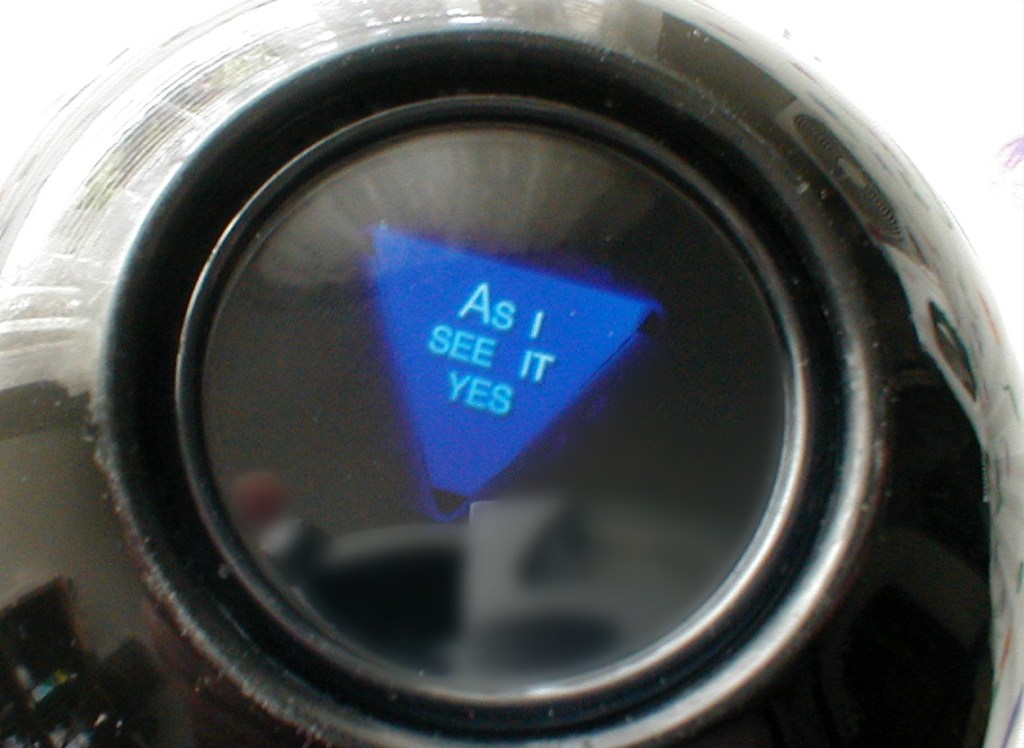
There is a certain comfort in the idea of an all-knowing oracle. At some point, all of us find ourselves staring at a crossroads in our lives, wishing for definitive guidance. So we ask the heavens for a sign. We peek at that horoscope, or Magic 8 Ball, or fortune cookie, and daydream about cosmic forces sending us a message. Maybe that mystical fortune teller can spoil the ending for us. It is a deeply human desire to have an authority figure tell us exactly what to do.
Why is that?
That’s easy. Adulting is hard, man. Making big life decisions is exhausting. Even small decisions drain mental energy, each costing a certain number of spoons. So when we ask a reader to predict our future, what we are often looking for is a way to bypass the anxiety of choice. If the cards say it’s going to happen, then whew! The weight of the decision isn’t on our shoulders anymore. We are just along for the ride.
In many traditional tarot spaces, readers lean into this. They adopt the role of the conduit, the one with The Sight™ who can peer into the dark and tell you what’s coming. It’s compelling, and for a lot of people, it’s exactly what they want: the relief of ceding control to 78 pieces of cardboard.
But there is a high price for that relief. When you give away the “how” of your future, you also give away your agency. You stop being the architect of your own life and become a spectator to it.
I take a different approach. I’m not interested in being an oracle, because I don’t believe the cards have more authority over your life than you do.
The Danger of Ceding Control
The problem with letting the cards—or any external authority—drive your life is that it breeds a certain kind of passivity. If you believe your path is already laid out by Fate, you might stop looking for the exits or the alternate routes. You might wait for a lucky break that you could have engineered yourself, or stay in a situation that isn’t working because “the cards said it would be okay.” Like in the parable of the drowning man, your faith in Providence can dissuade you from actively creating your future.
Relying on divination is a gamble that someone else’s interpretation of a random draw is more valid than your own judgment. When you give those cards the final word, you are opting out of the hard work of self-determination. It is a way of hiding from the responsibility of your own life.
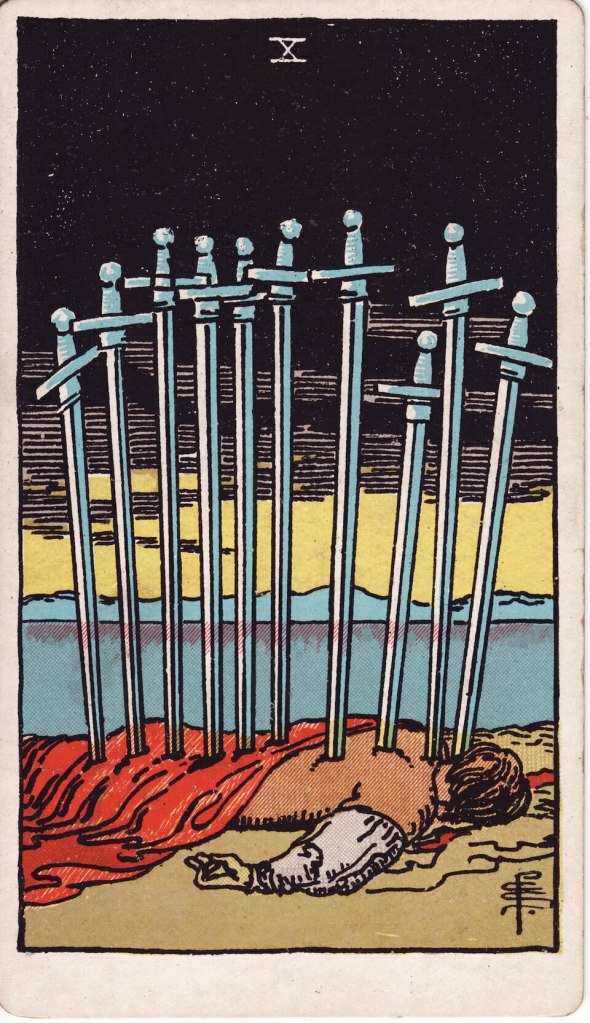
There is also the “bad card” trap. In a mystical setting, drawing the Tower or the Ten of Swords can feel like an omen of unavoidable disaster. It creates a sense of dread that can become a self-fulfilling prophecy. If you believe the cards are predictive, you are at their mercy. You become reactive rather than proactive.
That’s the exact opposite of what a tarot reading should accomplish. We want a mirror, not a script. The goal isn’t to find out what is going to happen to you. The goal is to decide what you are going to do about the things that are happening now. That requires shifting the locus of control from the table back to the seeker sitting at it.
Your Subconscious: The Real Second Opinion
If the goal isn’t to consult an oracle, then who are we talking to? The answer is you. Or, more specifically, your subconscious.
We all have this internal expert: our subconscious. It’s constantly processing patterns, storing life experiences, and weighing our deepest values. The problem is that our conscious brain is so busy adulting that it doesn’t hear from it, save the occasional dream. We get stuck in our loops of logic, social expectations, and the daily grind. We lose the forest for the trees.
This is where the cards come in. They aren’t magical, but they are incredibly effective tools for lateral thinking. When we look at a card like the Eight of Wands or the Queen of Pentacles, we aren’t looking at a message from the Great Beyond. We are looking at a prompt.
Because the symbols in Tarot are so broad and archetypal, your brain naturally tries to bridge the gap between the image and your current situation. In that “aha” moment of interpretation, it’s usually your subconscious finally getting a word in edgewise. It’s that gut feeling you’ve been ignoring, suddenly given a visual form.
I like to think of a reading as a second opinion. When you’re facing a big decision, you might call a trusted friend or a mentor to talk it through. You don’t do this because they have a crystal ball; you do it because they help you see the situation from a new angle.
A tarot reading is that same process, but the expert giving the second opinion is the part of you that already knows the truth, but hasn’t found the words for it yet. My role isn’t to tell you what that truth is; it’s to hold up the mirror so you can recognize it for yourself.
The Analytical Approach
This brings us to the question of style. Some readers lean heavily into the mystical or aesthetic aspects of the craft: setting out crystals, fashioning charms, relying primarily on vibes. Frankly, there’s a lot of creativity and beauty in that approach… but it isn’t mine.
My educational background is in engineering. I am wired for structure, patterns, and logic. That training allows me to handle the by-the-book meanings associated with the cards… yet a good tarot reading isn’t a math problem or a simple table lookup. Readings are a deeply human interaction that relies just as much on empathy and connection. Fortunately, my professional and creative life has also been rooted in marketing and in music. It’s about adding rigor to the intuition.
My favorite activities have always been left-brain, right-brain collaborations. The “right-brain” side provides the emotional and intuitive connection to the archetypes on the table. The “left-brain” side provides the framework to make sense of those emotions. My role is to bring an analytical eye to the narrative we’re building together. I’m looking at how the cards interact and where the logic of the story might be pointing, ensuring that our conversation stays grounded and productive.
This style is designed for people who want more than just a “vibe.” It’s for the seeker who wants to sit down and do some honest, rigorous work on their own perspective. We aren’t here to perform a ritual; we are here to have a structured, intentional dialogue.
By balancing that analytical rigor with a genuine human connection, we can focus entirely on your own authority. I’m not a high priest with the answers. I’m a collaborative partner helping you review and interpret the “data” your own subconscious is presenting.
Owning the Map
Ultimately, the goal of this approach is to hand the compass back to you. When we strip away the mystical shortcuts of predestiny and fate, we are left with something much more powerful: your own choice.
Tarot readings are collaborative map-making sessions. The cards provide the terrain—archetypes, obstacles, potential paths—and I help you interpret the symbols on the legend. But you’re the one who decides which path to take, how fast to travel, and where the journey ends.
What if my interpretation doesn’t resonate with your lived experience? You have the opportunity to figure out why you disagree, and you have the agency to discard it. If a card points toward a change you aren’t ready for, you have the power to decide your own timeline. No authority at the table can override your internal truth.
By treating tarot as a structured, intentional dialogue rather than a divination, you walk away from the table feeling more capable, not more dependent. Okay, maybe it’s a little disappointing that you actually have to do some work; you don’t get to sit back, relax, and let an unalterable future overtake you. But you don’t need an oracle to tell you what’s coming when you have a clearer understanding of who you are and what you value.
The next time you sit down for a reading, remember: I’m not here to spoil the ending of your story. I’m here to help you write it. The cards are just the ink; you’re the one with the pen.

 Tarot for Good
Leave a comment